
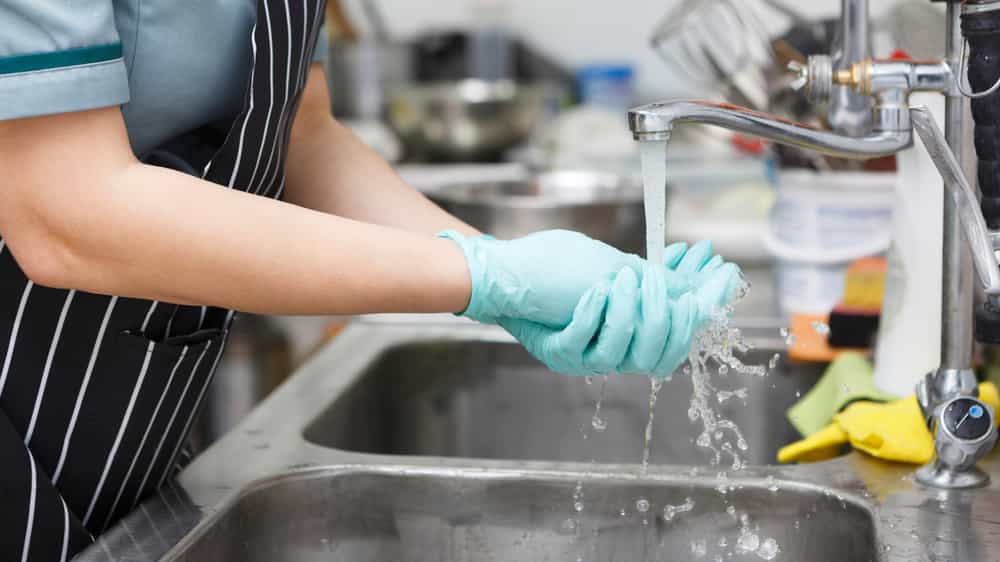
A commercial kitchen doesn’t slowly get dirty. It builds layers. Some of them are obvious. Others sit out of sight, collecting day after day until they become a problem no one planned for. That’s why surface cleaning, even when it’s done well, isn’t enough on its own. It keeps dishes coming and going in and out of the kitchen, but it doesn’t reset the space to a condition of sparkly, sanitized cleanliness.
How to Deep Clean a Commercial Kitchen
Commercial kitchen deep cleaning bridges that gap. It addresses grease vapor that settles above eye level, carbon that hardens onto metal over time, and residue that slips past daily routines. Knowing how to deep clean a commercial kitchen isn’t about using more elbow grease. It’s about knowing where buildup hides and dealing with it before it affects food safety or compliance.
The difference between regular cleaning and deep cleaning is scope. Daily cleaning focuses on what’s touched constantly. Deep cleaning focuses on what’s ignored because it’s inconvenient, time consuming, or difficult to reach. Hood systems, grease traps, floors under equipment, wall seams, and drains all fall into that second category.
From a food safety standpoint, deep cleaning reduces the risk of contamination by removing residue that can harbor bacteria or attract pests. From a staff perspective, it improves air quality, reduces slip hazards, and creates a safer work environment. For inspectors, it shows that sanitation isn’t being handled reactively.
Deep cleaning isn’t about passing a single inspection. It’s about lowering risk across the entire operation.
Step-by-Step Guide to Deep Cleaning
A deep clean works best when it’s planned instead of improvised. Before anything gets sprayed or soaked, the kitchen needs to be staged. Equipment should be shut down, cooled, and disconnected where required. Removable parts should be identified ahead of time, so nothing gets skipped or mishandled.
Most kitchens benefit from starting at the highest points and working down. Ceiling areas, vents, and hood systems come first. Grease vapor rises, and whatever loosens during cleaning will fall. Tackling these areas early prevents recontamination of surfaces below.
Hood filters and metal components usually require more than surface wiping. These parts collect layers of fat, oil, grease, and carbon that don’t respond well to quick cleaning. Removing them for off-line cleaning is often the most effective approach.
Walls, shelving, and storage areas come next. High shelves, wall seams, and areas behind equipment are common problem zones. They don’t get wiped daily, yet they collect airborne grease and dust over time. Under sinks and behind refrigeration units are also frequently missed, especially during busy service weeks.
Floors are last for a reason. A deep floor clean involves more than mopping open areas. Equipment should be moved where possible. Grout lines need attention. Floor drains should be flushed and scrubbed. Grease tends to migrate outward, settling near walls and under heavy appliances.
Using a commercial kitchen cleaning checklist during this process helps prevent assumptions. It turns a complex task into a controlled one. It also creates a record, which can be useful during inspections or internal audits.
Creating and Implementing a Cleaning Schedule
Deep cleaning loses its value if it only happens when something goes wrong. Without a schedule, kitchens fall into reactive cleaning, usually prompted by inspections, odors, or equipment failures. A defined schedule prevents that cycle.
Not every area needs the same frequency. Hood systems, grease-heavy equipment, and floor drains may require monthly or quarterly deep cleaning. Walls, storage areas, and ceilings can often follow longer rotations. The right schedule depends on volume, menu type, and operating hours.
Flexibility matters. Deep cleaning should be planned around slower periods or scheduled downtime whenever possible. Trying to force a full deep clean into peak operations usually leads to shortcuts, which defeats the purpose.
Staff buy-in makes schedules work. When cleaning is framed as a shared responsibility tied to safety and efficiency, compliance improves. Training helps, but so does clarity. People are more likely to follow a schedule when expectations are specific and reasonable.
Documentation supports consistency. Whether it’s a sign-off sheet, digital log, or supervisor review, tracking completed tasks reduces missed steps. It also supports sanitation compliance over time, especially in kitchens with rotating staff.
Troubleshooting Common Cleaning Challenges
Time is the most common obstacle. Kitchens operate on tight margins, and shutting down equipment for extended cleaning can feel disruptive. That’s why efficiency matters as much as thoroughness during deep cleaning.
Stubborn grease and carbon buildup present another challenge. Traditional scrubbing often requires repeated applications, heavy water use, and significant labor. Even then, results can be inconsistent, especially on heavily used metal equipment.
Access is another issue. Tight clearances, overhead systems, and fixed installations make certain areas difficult to reach. These spots often get skipped, not because staff don’t care, but because the process feels impractical during normal shifts.
Odors are a related problem. Lingering smells often come from grease traps, drains, or hood systems where buildup remains hidden. Masking odors doesn’t solve anything. Removing the source does.
Soak-based cleaning methods help address several of these challenges at once. By allowing grease and carbon to break down over time, they reduce the need for aggressive scrubbing and repeated rinsing. This approach also limits water use and labor fatigue.
Choosing the Right Cleaning Supplies and Equipment
The tools used during a deep clean shape the outcome more than most people realize. Overly harsh chemicals can damage surfaces, increase water usage, and create safety concerns for staff. At the same time, underpowered products often lead to repeated cleaning cycles that waste time.
Non-caustic solutions tend to offer better long-term results. An environmentally friendly degreaser can be adjusted to fit the task instead of forcing one concentration onto every surface. Used at full strength, it handles ovens and heavy buildup. Diluted appropriately, it works for walls, floors, stainless steel, and tile without excessive rinsing.
Metal equipment requires a different strategy altogether. Pots, pans, hood filters, and similar items collect layers of grease and carbon that surface cleaning can’t fully address. Using a heated soak tank allows these items to be submerged in a controlled solution where buildup releases on its own. After soaking, a rinse completes the process without scrubbing.
The chemistry involved matters. Tiger Carbon Remover Powder is formulated to break down fat, oil, grease, and carbon efficiently. Because the same water and solution can be used for extended periods, this method limits water usage and creates consistent results across cleaning cycles.
Tools for hard-to-reach areas are just as important. Long-handled brushes, narrow scrubbers, and drain-specific tools allow staff to clean areas that otherwise remain untouched. The right tool reduces effort and improves outcomes without improvisation.
A commercial kitchen deep cleaning works best when supplies support the process instead of complicating it. Products that reduce repetition, control water use, and improve consistency tend to deliver better results over time.
Deep cleaning isn’t about making a kitchen look better for a day. It’s about removing buildup that affects safety, compliance, and equipment performance. Knowing how to deep clean a commercial kitchen means understanding where routine cleaning stops and deeper sanitation needs to begin.
When deep cleaning becomes part of standard operations, kitchens become easier to manage. Daily cleaning goes faster. Equipment lasts longer. Inspections feel less stressful. A commercial kitchen cleaning checklist becomes a guide rather than a reminder of missed work.
Most importantly, deep cleaning creates a safer environment for everyone who works in the space. Not because it’s spotless, but because it’s controlled, maintained, and addressed before small problems turn into serious ones.