

Benefits Of Soak Tank Cleaning With The FOG Tank® For Commercial Kitchens

Soak tank cleaning swaps hand scrubbing for a heated soak that lifts fat, oil, grease, and baked-on carbon off your cookware and kitchen equipment while your team tackles other work. Load The FOG Tank®, close the lid, walk away. The payoff shows up in labor hours, water use, energy bills, equipment life, and the safety and efficiency of the people doing the job. Below is what each of those benefits of soak tank cleaning looks like in a real commercial kitchen.

Dirty carbonized pans hanging on a wooden wall

Soak Tank Cleaning vs. How Most Kitchens Clean Now

THREE-COMPARTMENT SINK

  • Water changes: Every 1 to 2 hours
  • Scrubbing required: Yes
  • Removes heavy carbon: No
  • Capable of daily cleaning: Yes
  • Staff attention while cleaning: Constant
  • Water used: Roughly 960 gallons per day at 8 refills

DISH MACHINE

  • Water changes: Every rack
  • Scrubbing required: Yes, for anything carbonized
  • Removes heavy carbon: No
  • Capable of daily cleaning: Yes
  • Staff attention while cleaning: Constant
  • Water used: Varies by rack volume

SOAK TANK

  • Water changes: Once per month
  • Scrubbing required: No
  • Removes heavy carbon: Yes
  • Capable of daily cleaning: Yes
  • Staff attention while cleaning: None
  • Water used: As little as 25 gallons per month
 Three-compartment sinkDish machineSoak tank
Water changesEvery 1 to 2 hoursEvery rackOnce per month
Scrubbing requiredYesYes, for anything carbonizedNo
Removes heavy carbonNoNoYes
Capable of daily cleaningYesYesYes
Staff attention while cleaningConstantConstantNone
Water usedRoughly 960 gallons per day at 8 refillsVaries by rack volumeAs little as 25 gallons per month


A soak tank takes over the jobs the sink and dish machine handle badly: hood filters, sheet pans, fry baskets, oven racks, and anything with a carbon crust on it. It can also be used for daily cleaning of your metal and heavy-duty plastic cookware and kitchen equipment.

While you’re still required to have a three-compartment sink, you aren’t required to use it. The more you move to The FOG Tank®, the more you can save and take advantage of the benefits of soak tank cleaning.

Labor Savings From Soak Tank Cleaning

The FOG Tank® gives back half an hour or more of stewarding labor every day.

Half an hour per day may not sound like much until you run it out to a year. A kitchen open seven days a week recovers more than 180 hours, or roughly four and a half weeks of full-time work.

Scrubbing is the most expensive thing your team does with its hands, and it’s the easiest cost to miss because it never shows up as its own line item. Take whatever your kitchen pays for a labor hour once you’ve added payroll taxes, insurance, workers’ comp, and the cost of replacing people who quit. Multiply that by 180.

A heated soak tank changes the math because nobody has to stand there. Cookware and kitchen equipment go into The FOG Tank® dirty, the heat and proprietary Tiger Carbon Removal Powder do the work, and your items come out clean and ready to rinse. That time comes straight back to you, either as reduced overhead or as labor redeployed elsewhere.
“We have purchased hundreds of FOG tanks from Hyginix. Hyginix provides a proven solution for effective “in-house” cleaning of our hood filters in a compact space. The Hyginix tank continues to withstand the daily use of hot soak cleaning 365 days a year. The cost savings of self-performed cleaning combined with great customer service provides the value we continue to enjoy in our partnership with Hyginix.”

Rob WachVP of Facilities, Habit Burger Grill

Carbon Comes Off In Soak Tanks Without Scrubbing

Using Our Tiger Carbon Removal Powder in The FOG Tank® cleans your equipment with no scrubbing at all.

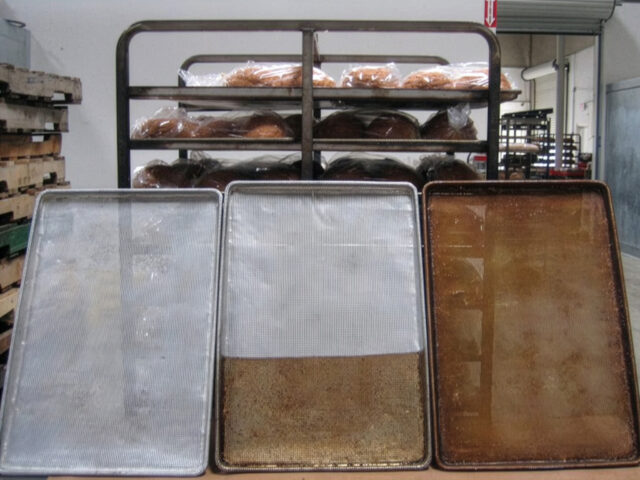
Three baking sheets. The sheet on the left is completely clean, the middle one is half clean and half dirty, and the right is completely dirty.

Fat, oil, and grease bake onto metal every service. Over weeks that residue hardens into a carbon crust that a sink and a pad will not touch. Most kitchens live with it until the pan looks bad enough to throw away.

That crust costs you twice. It makes the item harder to clean each time, and it acts as a heat barrier on the cooking surface, so the pan takes longer to come up to temperature and food cooks unevenly on it.

The FOG Tank® handles carbon with a proprietary cleaning agent that is non-caustic, non-toxic, fully biodegradable, and food safe. It is aluminum safe, and it works on heavy-duty plastic as well as metal. One of the biggest benefits of soak tank cleaning is items come out clean without any scrubbing or staff oversight.

Why Soak Tank Cleaning Is Safer For Your Staff

No caustic chemicals, no wire pads, no hours leaning over a hot sink.

Hand scrubbing carbon is one of the rougher assignments in any kitchen. It puts a staff member in contact with hot water and harsh degreasers for hours a week, with sharp pan edges and wet floors in the mix. Repetitive scrubbing injuries and chemical burns are common enough that most operators have dealt with at least one.

Soak tank cleaning removes the contact. The cleanser is non-caustic and non-toxic, the lid stays closed while the tank works, and the only handling is loading, unloading, and rinsing (though gloves are still recommended since the water is held at 185° F and items will be hot). Operators who switch report fewer injuries in the dish pit and an easier time keeping that role staffed.

Lower Your Energy Bills With Soak Tank Cleaning

The FOG Tank® can save a single restaurant location over $3,000 per year in energy costs.

Food service buildings are among the most energy intensive commercial properties in the country. According to the U.S. Energy Information Administration’s Commercial Buildings Energy Consumption Survey, food service buildings use roughly four times the energy per square foot of the average commercial building, and cooking alone accounts for about 40% of that.

A good share of the rest goes into heating water. Three-compartment sinks and power sinks get drained and refilled with hot water every one to two hours to stay sanitary. Dish machines dump heated water with every rack. And the carbonized pans coming out of those systems take more gas to heat on the range than clean ones do.

The FOG Tank® is fully insulated and holds water at a constant 185° F, so it isn’t reheating from cold all day. You heat the water once instead of eight times a shift.

Soak Tank Cleaning Uses Less Water Than Sinks

Add water to The FOG Tank® once a month instead of eight times a day.

A three-compartment sink refilled up to eight times a day runs through roughly 960 gallons. That water gets used, cooled, and dumped, along with whatever chemical went into it.

Because the Tiger Carbon Removal Powder keeps working for a full month, the water in your FOG Tank gets changed once and only once in that period. A kitchen can run on as little as 25 gallons a month for the equipment our soak tank handles. The powder is fully biodegradable, so spent tank water goes down a kitchen drain without special disposal.

Get Cleaner Hood Filters With Less Effort

Filters come out of The FOG Tank® roughly half a pound lighter compared to a three-compartment sink.

Filters are the job nobody wants. The standard approach is to leave them in the three-compartment sink, which ties up the sink, wastes a full basin of hot water and chemicals, and still leaves grease behind.

Hood filters cleaned in The FOG Tank® come out about half a pound lighter on average than filters cleaned by hand, which is a direct measure of how much grease was left in them before. Filters loaded with grease are a known fire risk, and they are usually the first thing an inspector picks up. Keeping filters clean means you’ll get both safety and financial benefits from soak tank cleaning.

Kitchen Equipment Cleaned In A Soak Tank Can Last Longer

Pans get thrown out because of carbon, not because they wore out.

Ask any kitchen what happens to a sheet pan with a hard black crust on it. It goes in the trash, because nobody has four hours to save a $30 pan. Multiply that across trays, fry baskets, and Cambro pans over a year, however, and the replacement line on your budget gets ugly.

Cookware and equipment that stays clean stays in service. Bringing carbonized items back rather than replacing them is one of the fastest paybacks on a heated soak tank, and it’s the one most operators don’t think to count.

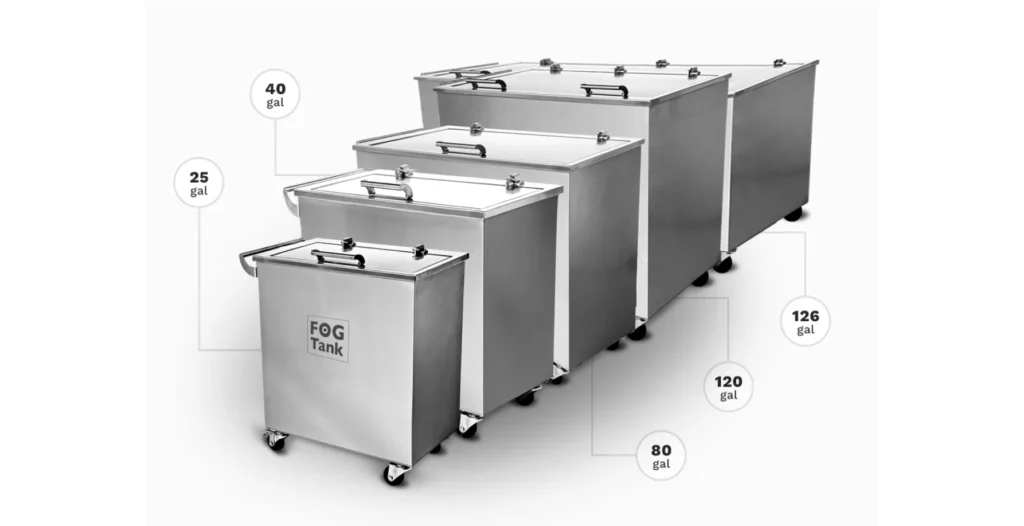
All sizes of The FOG Tank, including 25, 40, 80, 120, and 126 gallon models

The FOG Tank® Fits Where You Already Have Space

Our 40-gallon soak tank slides under a standard counter or under the drainboard of your existing sink.

The most common reason kitchens hesitate to add a soak tank is floor space, but it’s easier to fit than you’d think. The 40-gallon Standard model FOG Tank measures 34 ½ inches wide and 33 inches tall, which puts it under a standard counter or under the drainboard of the sink you already have. It does not add a new station to your line.

It also doesn’t have to live in the kitchen. Operators put them in back hallways, dish rooms, receiving areas, and prep spaces. The tank runs with the lid closed and nobody standing over it, so proximity to the line isn’t necessary.

FOG Tank sizes run from a 25-gallon Mini up to a 126-gallon unit, so the footprint scales to the operation rather than the other way around.

How Multiple Locations Benefit From Soak Tank Cleaning

Single locations buy a soak tank to get hours back. Multi-unit operators buy The FOG Tank® for consistency. One cleaning procedure, one supply order, one thing to train staff on, and the same result in every kitchen whether the location has a veteran steward or a new hire on week two.

Multi-location rollouts also mean even higher water, energy, and labor savings. Best of all, those savings happen every month without any additional effort from the field.

Commercial Kitchens Across The Country Trust The FOG Tank®

The FOG Tank® is built by Hyginix, a woman-owned, family-run manufacturer and the company behind the original heated soak tank. Every tank is 304 stainless steel and fully insulated, with units still in the field and working after 20+ years. Plus, The FOG Tank® is certified by UL (Underwriters Laboratories) and NSF (National Sanitation Foundation), and it’s used by thousands of customers in all 50 states.

Soak Tank Cleaning FAQs

What is soak tank cleaning?

A heated soak tank holds water at a set temperature with a cleaning agent dissolved in it. You place dirty equipment inside The FOG Tank®, close the lid, and the heat and cleanser break down fat, oil, grease, and carbon on their own. No scrubbing, no supervision. Items just need a quick rinse after they come out of the tank.

Does a soak tank replace my three-compartment sink?

The FOG Tank® takes over the items that the sink cleans poorly or slowly, especially hood filters, sheet pans, fry baskets, and anything carbonized. It can also perform daily cleaning for any metal or heavy-duty plastic cookware and equipment. Your sink is required by code and stays where it is, but moving more of your cleaning into the tank allows you to take advantage of the savings offered by a heated soak tank.

How often does the water need to be changed in a soak tank?

Once a month. Fill The FOG Tank® with water up to the fill line, add the Tiger Carbon Removal Powder, and it keeps working for a full month whether you use it once a week or run it around the clock.

How long does an item need to soak to get clean in a tank?

Anywhere from about ten minutes to several hours, depending on how heavily soiled it is. Day-to-day grease comes off fast. Heavier carbon buildup takes longer, and many kitchens load The FOG Tank® at the end of a shift and pull the items out clean the next morning.

What can I clean in a heated soak tank?

Pots, pans, sheet pans, hood filters, fry baskets, oven racks, Cambro pans, pizza screens, and more. The FOG Tank® is safe to use on aluminum and other metals, as well as heavy-duty plastic.

Is the soak tank cleaner safe to handle?

Our Tiger Carbon Removal Powder is non-caustic, non-toxic, fully biodegradable, and food safe. Spent tank water can simply go down a kitchen drain, no special disposal needed.

Request A Quote For The FOG Tank® Today

Buy or lease our soak tank, with sizes from 25 to 126 gallons.

See what the benefits of soak tank cleaning with The FOG Tank® can mean for your kitchen. Our team will run the numbers on your equipment volume and current labor hours, with no obligation.

Request a Quote