
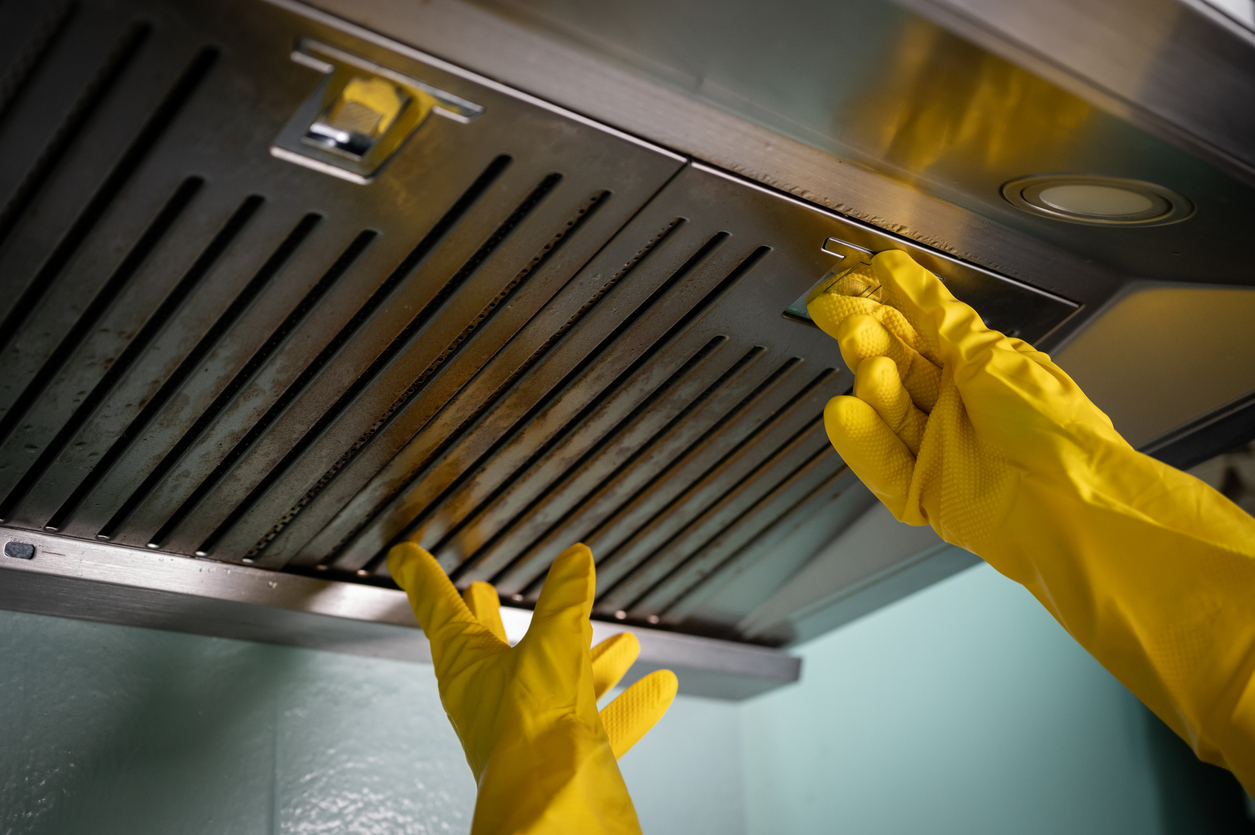
In a commercial kitchen, cleaning is a serious necessity. But one area of kitchen cleaning that unfortunately often falls to the wayside is hood vent cleaning. Because hood vents are not generally a daily cleaning responsibility, they can fall off the list of priorities in a poorly-organized kitchen. But the consequences of that oversight can be dire.
Neglected hood filters can lead to fines, failed health inspections, and worst of all, a fire burning down your kitchen. Hood filter cleaning is a non-negotiable kitchen responsibility, not just a best practice. Read on to learn why hood vent cleaning matters, how to clean kitchen hood filters, and what tools make cleaning vent hood filters easier.
Why Hood Vent Cleaning Matters
The most significant reason that hood vent cleaning matters is that grease buildup trapped in the vent creates an increased fire risk. NFPA 96 compliance requires that commercial kitchens operate, and critically maintain fire-safe ventilation systems. When grease is allowed to gather in a hood vent, that means these ventilation systems have been inadequately maintained.
To ensure compliance, kitchens are required to have regular certified inspections. But kitchens can easily fail these health code violations and inspections due to dirty filters.
Even short of a fire, poor ventilation results in uncomfortable and unsafe conditions for kitchen staff. The air quality goes down, making it difficult to breathe. Reduced airflow forces HVAC systems to work harder, which raises energy costs and may raise the temperature of the kitchen despite the AC supposedly running.
Kitchen staff may assume that a significant amount of grease couldn’t possibly build up in a hood vent. But that’s far from the case. Hood filters cleaned in a FOG Tank were 0.5 lbs lighter after cleaning. That’s 0.5 lbs of grease that was trapped in the vent.
How Often Should You Clean Hood Vent Filters?
One of the difficulties with sufficiently cleaning vent hood filters is that it can be unclear how often to clean them. Not only is it less frequent than daily, which makes it harder to schedule into routines than daily closing tasks, but the frequency will change depending on your kitchen volume.
Generally, kitchen staff should clean their hood vent filters with this frequency:
- High-volume kitchens: weekly or more
- Standard commercial kitchens: every two weeks
- Lower-volume operations: monthly minimum
The frequency with which you clean your hood filters will change depending on your cooking type. Kitchens that perform char-grilling or deep frying, for example, will need to clean their hoods daily.
In addition to the specific volume of your kitchen, frequency requirements may vary by local health code, so make sure to always stay up-to-date on local regulations.
How to Clean Kitchen Hood Filters: Traditional Methods
There are several standard methods of how to clean kitchen hood filters, with varying degrees of success.
The Three-Compartment Sink Method
With a three-compartment sink, the filter soaks overnight in hot water with a degreaser. In the morning, it’s scrubbed by hand, then rinsed and sanitized.
While three-compartment sinks are the commercial kitchen standard, they come with some drawbacks. Water must be replaced every one to two hours as it cools; plus, it’s labor-heavy and creates a lot of chemical waste that can be tricky to dispose of.
Commercial Dishwasher
For light grease buildup, some kitchens may put their filters through commercial dishwashers. Commercial dishwashers are easy and low-effort to use, but they work poorly with heavy carbon and grease. They also create water and energy consumption.
Manual Scrubbing
Some kitchens, especially after unsuccessfully attempting to use their commercial dishwashers, may opt to manually scrub their filters. This practice is time-consuming and produces inconsistent results. It may even damage the filter mesh if inconsistent pressure is applied.
Overall, manual scrubbing relies too heavily on individual staff effort for consistent cleaning practices.
A Better Way: Heated Soak Tank Cleaning
If none of the standard methods for how to clean kitchen hood filters sounded appealing, don’t worry. There’s another option: The FOG Tank, a heated soak tank. Heated soak tanks are the modern solution for commercial kitchens.
With a FOG Tank, kitchen staff simply fill the tank with water and add Tiger Carbon Remover Powder once a month. And unlike the chemicals in a three-compartment sink, the powder is non-caustic, non-toxic, and food-safe.The tank holds its temperature at 185 degrees without constantly reheating, so you can add objects for cleaning whenever you need.
When you want to clean the hood vents, you simply load them in, close the lid, and walk away, no scrubbing required.
After cleaning vent hood filters with a FOG Tank, you’ll get clean, sanitized, lighter filters with a fraction of the labor. You’ll also save on energy and water compared to traditional methods, since FOG Tanks simply maintain their temperatures and only need to be changed once a month. Cleaning vent hood filters has never been more hands-off.
Cleaning Vent Hood Filters Protects Your Kitchen
When the right system is in place, hood vent cleaning is a straightforward process. You don’t need to do it every day, but you do need to make sure that cleaning vent hood filters is a standard part of your kitchen deep-cleaning routine and that everyone on your team understands how to clean kitchen hood filters.
Assign specific days and staff to filter cleaning, so that it never gets swept under the rug. Keep a cleaning log of your cleaning frequency for health inspections. And if you have a FOG Tank, pair hood filter cleaning with other equipment cleaning tasks to maximize efficiency. You can clean them in the tank at the same time.
While you can clean vent hood filters through traditional methods, it’s worth considering investing in a FOG Tank to save your kitchen time and money. FOG Tanks are a tool that removes labor, reduces costs, and keeps kitchens compliant with safety regulations. For commercial kitchens, those benefits are well-worth the investment. To learn more about bringing a FOG Tank to your kitchen, or contact us online or give us a ring at 858-566-6212.