
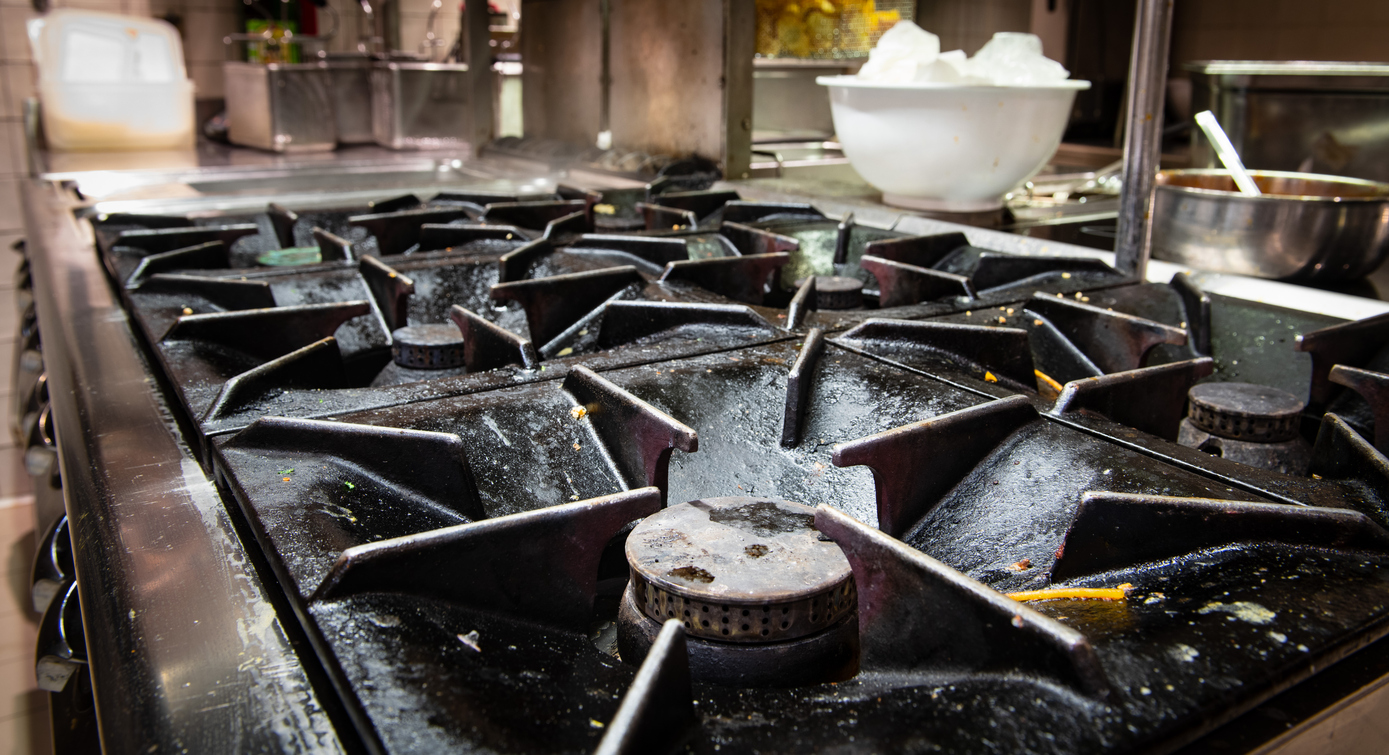
Walk into any commercial kitchen and the surfaces are one of the first things that tells you how well the operation is run. A clean kitchen means someone has a system. Greasy or carbon-coated surfaces means someone has been putting it off, and the longer it gets put off, the harder and more expensive the problem becomes.
Picking the right degreaser is not as simple as grabbing whatever is under the sink. The wrong product can cause damage, create hazards for your staff, and still leave buildup behind. This guide walks through what to look for, what to avoid, and how the best commercial kitchens handle cleaning efficiently.
Why Grease Buildup Is a Serious Problem
Every cooking shift generates fat, oil, and grease. It lands on pots, pans, sheet trays, and fry baskets. It coats vent hood filters and bakes onto the surfaces of your cookware. Left alone, it hardens with heat, layers on top of itself, and eventually becomes carbon, the black, crusty buildup that most kitchen operators assume is just part of the job.
It is not just part of the job. Grease buildup across your kitchen equipment creates real, compounding problems.
The fire risk is the most urgent. Grease that accumulates in duct systems and exhaust equipment is among the most dangerous hazards in commercial foodservice. Fires that start there are hard to reach, hard to extinguish, and can spread through the entire exhaust system before anyone realizes there is a problem. The National Fire Protection Association sets cleaning frequency requirements for commercial kitchen exhaust systems specifically because of this risk.
But grease buildup does not have to reach your ducts to cause problems. On your cookware and kitchen equipment, heavy carbon and grease residue affects heat transfer, which means food cooks unevenly. It creates sanitation issues that health inspectors look for. It shortens the lifespan of your equipment by degrading surfaces that are expensive to replace. And it costs your team time, because the longer buildup is left to harden, the longer it takes to remove.
A consistent cleaning process, using the right chemistry for the job, stops all of that before it starts.
What Makes a Good Degreaser
Not every degreaser is built for commercial kitchen work. High-volume kitchens deal with polymerized grease, baked-on carbon, and in some cases months of accumulated buildup on equipment that does not get cleaned as often as it should.
Here is what matters most when choosing a degreaser for your operation.
Cleaning power on baked-on grease. This is the baseline requirement. A degreaser needs to handle everyday surface grease, but it also needs to penetrate hardened carbon on cookware, filters, sheet trays, and any other equipment that sees repeated heat and use. Look for formulas built specifically for heavy-duty kitchen grease, not general-purpose cleaners that happen to include the word degreaser on the label.
Safety for aluminum. A lot of commercial kitchen equipment, including many vent hood filters, is made from aluminum. Highly caustic degreasers, particularly those containing lye or strong alkaline compounds, can corrode aluminum surfaces over time. Confirm that any degreaser you use is explicitly rated as aluminum safe.
Staff safety. Caustic degreasers require protective equipment, careful handling, and specific disposal procedures. In a fast-moving kitchen environment, that creates real risk. Non-caustic, non-toxic formulas, like GrimeGo® from Hyginix, protect your team without requiring a hazmat protocol every time someone cleans a surface.
Compatibility with your cleaning method. Whether you are soaking equipment, spraying and wiping surfaces, or running a combination of both, the degreaser needs to work with your process. Some formulas are designed for spray application and short contact times. Others are made to work in a heated soak over a longer period, which is where Tiger Carbon-Removal Powder comes in for heavier buildup on pots, pans, and filters. Using the right product for the right method makes a real difference in results.
Environmental considerations. Biodegradable, non-toxic formulas are easier to dispose of and carry less regulatory burden. For operations with grease trap systems, avoiding harsh chemicals that could disrupt biological treatment processes is worth factoring into your decision.
The Two Situations That Call for Different Approaches
Kitchen cleaning generally falls into two categories, and the right degreaser approach is different for each.
Routine maintenance cleaning covers the regular removal of surface grease and light buildup from floors, mats, oven interiors, equipment surfaces, and hood components. This is the daily and weekly work that keeps things manageable between deeper cleans. A quality spray degreaser applied directly to surfaces, given a short dwell time, and wiped or rinsed away handles this well.
GrimeGo® by Hyginix is built for exactly this kind of work. It is a non-toxic, non-caustic, biodegradable all-purpose degreaser that works across the full range of surfaces your team deals with every shift. For keeping equipment clean between deep soaks, it covers the job without putting your staff or your equipment at risk.
Cleaning heavy buildup is a different challenge. Baked-on carbon and polymerized grease that has been accumulating on cookware, fry baskets, sheet trays, and hood filters for weeks or months requires more than a spray and a wipe. This is where a heated soak with a purpose-built cleaning powder makes the difference between equipment that comes out truly clean and equipment that just looks a little better than before.
Tiger Carbon-Removal Powder, used in The FOG Tank®, was designed for this level of cleaning, in addition to your daily cleaning of items that can fit inside the tank. It breaks down fat, oil, and grease, as well as heavy carbon buildup, during a heated soak. It is non-caustic, non-toxic, fully biodegradable, aluminum safe, and food safe. Equipment that comes out of The FOG Tank® after a soak is clean throughout and fully sanitized, ready to use immediately. So whether you have deep cleaning to do or just need a few pans to come out ready to use daily, a FOG Tank covers it all.
For anything that cannot fit inside the FOG Tank, such as kitchen floors or oven interiors, GrimeGo® can be used.
When Heated Soaking Outperforms Spray Degreasers for Buildup
For routine surface wiping, a good spray degreaser is the right tool. But for cookware, fry baskets, sheet trays, hood filters, and other equipment carrying serious buildup, nothing beats a heated soak when it comes to thoroughness and efficiency.
Here is why. The grease and carbon on heavily used kitchen equipment is not just sitting on the surface. It has been driven into the metal by repeated heat cycles, layer by layer, shift by shift. A spray degreaser works from the outside in and has limited contact time before it needs to be rinsed. It loosens surface grease well, but it does not have the dwell time or penetration to pull buildup out of textured surfaces, mesh structures, basket frames, or the corners and crevices of complex cookware.
A heated soak surrounds the equipment completely, maintaining consistent temperature and chemistry. The cleaning solution works continuously from every angle, breaking down buildup throughout rather than just on the face of whatever you are cleaning. When you pull the equipment out and rinse it, you are not scrubbing off what the degreaser loosened. You are rinsing away residue that the soak already dissolved.
The difference shows up in the results. Hood filters cleaned in The FOG Tank® have come out over a half pound lighter after soaking because the grease and carbon mass has been fully removed, not just shifted around. That kind of result is not something a spray application achieves on heavily soiled equipment, no matter how long you let it sit.
Setting Up a Two-Step Kitchen Cleaning System
The most practical approach for most commercial kitchens combines both tools: a spray degreaser for ongoing surface maintenance and a heated soak tank for cleaning of cookware and equipment.
The routine looks like this. During or after each service, a quick spray and wipe of floors, mats, oven interiors, hood surfaces, and other accessible areas with GrimeGo® keeps grease from building up into something that requires serious intervention. This takes a few minutes per area and prevents the kind of accumulation that turns a manageable cleaning task into an all-night job.
On a regular schedule, pots, pans, fry baskets, sheet trays, hood filters, and other equipment go into The FOG Tank® for a soak. Because the tank does the work overnight, there is no scrubbing involved and no significant staff time beyond loading and unloading. Equipment comes out clean throughout, not just on the surface.
This two-step system keeps kitchen cleaning manageable across the board. It keeps equipment genuinely clean rather than just passably clean, extends the life of your cookware and filters, and reduces the risk of grease buildup reaching the point where it creates real compliance or fire safety problems. For kitchens that run hard every day, it is the kind of system that pays for itself in labor hours alone.
What to Avoid When Choosing a Kitchen Degreaser
A few categories of products and practices are worth steering clear of.
Highly caustic formulas. Products containing sodium hydroxide or other strong alkaline compounds are effective on grease, but they come with significant downsides. They can corrode aluminum cookware and filters. They require protective equipment. They need careful disposal. And if they contact skin, the injury is immediate. Non-caustic alternatives have caught up in cleaning power for most commercial kitchen applications, and the tradeoffs no longer make caustic formulas worth it for routine use.
Undiluted industrial degreasers not rated for food environments. Some industrial cleaning products are not food safe and leave residues that have no place near commercial kitchen equipment. Always confirm that any degreaser used in or around a kitchen is rated for foodservice environments.
Single-use chemical setups for soaking. Mixing a fresh chemical bath every time you soak cookware, filters, or other equipment is costly, time-consuming, and wasteful. Tiger Carbon-Removal Powder used in The FOG Tank® lasts a full month, which means one setup handles every cleaning cycle for thirty days of continuous use. Compared to constantly refilling a three-compartment sink with fresh water and chemicals, the difference in cost and labor adds up fast.
General-purpose cleaners for heavy carbon buildup. A product that works well on floors and surface grease is not necessarily the right tool for baked-on carbon. Using the wrong chemistry for the job means more scrubbing, longer cleaning times, and results that fall short of what purpose-built products deliver.
Final Thoughts on Kitchen Degreasers
Finding the right degreaser for your kitchen comes down to matching the product to the job. Surface maintenance for items that cannot fit in your FOG Tank calls for a fast-acting, non-toxic spray degreaser that your team can use quickly and safely every shift. Cookware, filters, fry baskets, and other heavily soiled equipment calls for a heated soak that cleans items daily as well as needed deep cleans.
GrimeGo®, Tiger Carbon-Removal Powder, and The FOG Tank® give commercial kitchens everything needed to keep your commercial kitchen clean.
Have questions about the right setup for your kitchen? Contact us now to speak with one of our experts.