
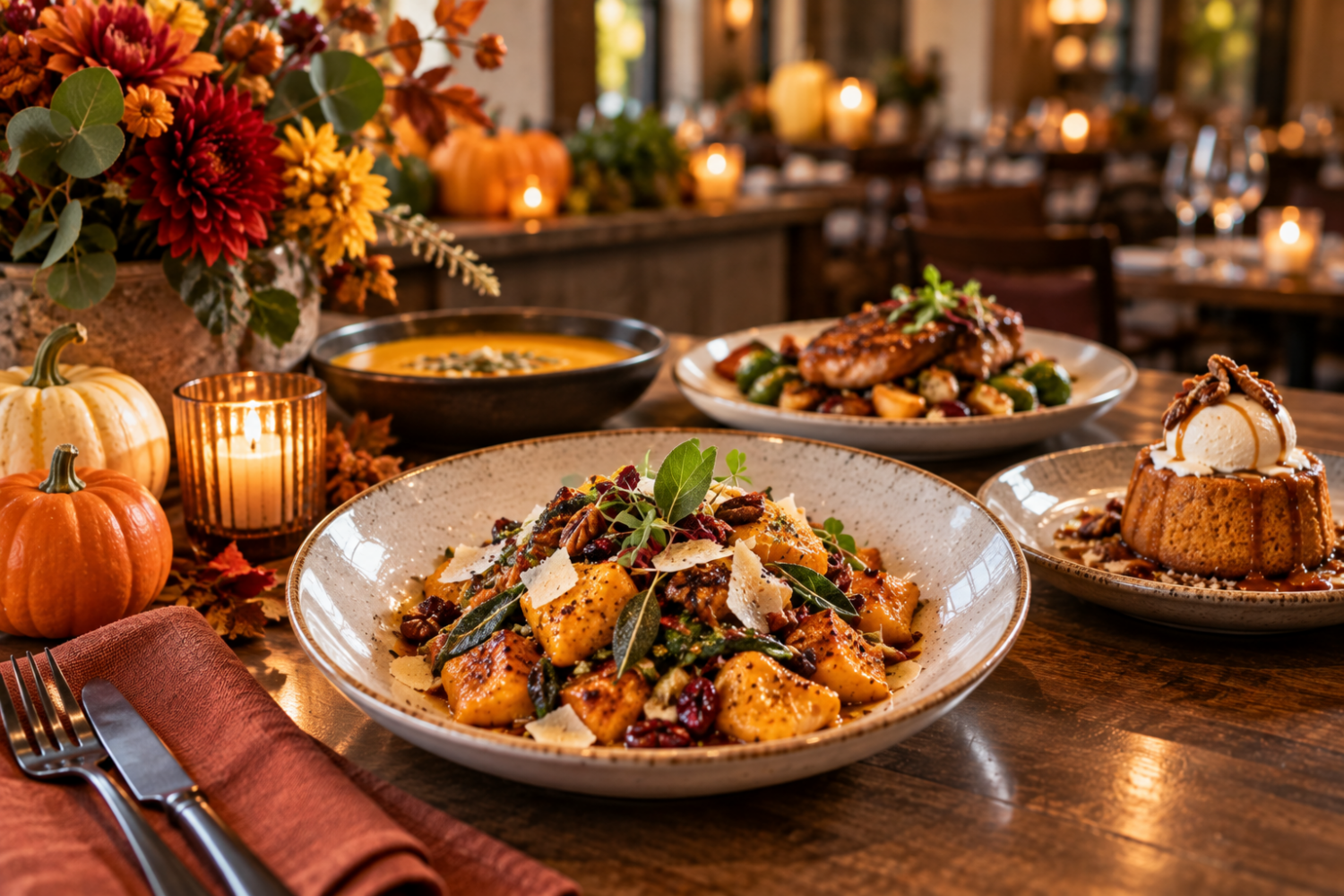
Pumpkin in October. A watermelon cocktail in July. A short rib special when the weather turns cold. Seasonal menu items can give customers a reason to come back, create something new to market and allow a restaurant to experiment without committing to a permanent menu change.
There is real consumer interest in limited time offers. National Restaurant Association research found that value deals including limited time offers resonate with roughly 8 in 10 delivery, takeout and drive thru customers. Industry use of LTOs has also been increasing. Technomic data reported by Restaurant Business showed LTO launches were up 19% year over year as of November 2025.
But there's another side to seasonal menus.
Every new item can mean new ingredients, new prep, employee training, inventory, changes to kitchen workflow and another opportunity for waste.
So the question shouldn't simply be:
“Would our customers like this?”
It should be:
“What is this seasonal item supposed to accomplish for the restaurant?”
Seasonal Items Can Give Customers a Reason to Come Back
A permanent menu has an inherent challenge. Your most loyal customers already know it. Seasonal offerings introduce something they haven't tried yet without requiring the restaurant to constantly reinvent its core menu. That can create urgency too. A customer knows the permanent burger will probably still be there next month. The summer peach salad or holiday dessert may not be.
Restaurants are using this strategy extensively. The National Restaurant Association describes LTOs as a way to market seasonal foods and introduce new menu ideas and concepts. But novelty by itself isn't a strategy. A seasonal item becomes much more valuable when there is a clear reason for introducing it.
Seasonal Doesn't Have to Mean Holidays
It's easy to associate seasonal menus with pumpkin in fall and peppermint in December. That's only one interpretation. Seasonality can be based on: weather, ingredient availability, local events, sports seasons, tourism patterns, customer behavior, regional traditions, or simply the way people want to eat at different times of year. The National Restaurant Association's 2026 culinary forecast, for example, identified local sourcing as a major menu trend, with restaurants featuring ingredients from nearby producers.
A restaurant might feature tomatoes when they're particularly good locally, introduce lighter dishes during hot weather or offer heartier foods as temperatures fall. The connection doesn't have to feel forced. Ideally, the item makes sense at that particular moment.
Seasonal Menus Can Become a Restaurant's Testing Lab
This may be one of their most useful purposes. Imagine your chef has an idea for a new sandwich. You could put it permanently on the menu and hope customers like it, or you could introduce it for six weeks. Now you have real information.
How many people ordered it?
Did customers reorder it?
What did they say about it?
Did servers find it easy to sell?
Did the kitchen find it easy to produce?
Did customers mention it in reviews?
Did it generate a healthy contribution margin?
Was there significant waste?
And perhaps most importantly:
Did customers ask for it after it disappeared?
Instead of debating whether an idea will work, a limited time offering can create an opportunity to observe what customers think. Restaurant Business has documented this kind of structured approach at First Watch. The chain developed a seasonal LTO strategy that incorporated testing, operator feedback, supply chain planning and longer R&D timelines rather than simply launching new items rapidly. That makes a seasonal menu more than marketing. It becomes restaurant R&D.
But Measure More Than Sales
Suppose you introduce a seasonal pasta. Over six weeks you sell 2,000 of them. Success? Maybe.
Sales volume tells you customers wanted the dish. It doesn't tell you whether the restaurant benefited financially from selling it. This is where the menu profitability calculations become useful.
Start with:
Food Cost % = Portion Cost ÷ Selling Price × 100
Then:
Contribution Margin = Selling Price − Portion Cost
And:
Total Item Contribution = Contribution Margin × Number Sold
Imagine the seasonal entrée sells for $28 and has a $9 portion cost.
Its food cost percentage is approximately 32.1%.
Its contribution margin is $19.
If the restaurant sells 1,000:
$19 × 1,000 = $19,000 in total item contribution before the restaurant's other operating expenses.
That's considerably more informative than simply saying:
“We sold $28,000 worth.”
But even that isn't the end of the analysis.
The Hidden Cost of “Just One More Menu Item”
A chef might develop a great seasonal entrée with a strong contribution margin. But what did the restaurant have to do to produce it? Suppose it requires: four ingredients used nowhere else on the menu, a sauce that takes an hour to prep every morning, special packaging for takeout, additional employee training, a new supplier order, and dedicated refrigerator space.
Suddenly, the item looks a little different.
Restaurant Business has noted that LTO launches can require investments in areas such as sourcing and training, which means operators need enough sales and an appropriate promotional window to justify those costs. This is why menu complexity has a cost, even when that cost doesn't appear neatly in the food cost percentage. Every additional item asks something from the operation. The question is whether it gives enough back.
Ingredient Overlap Can Make a Seasonal Item Much Smarter
Now imagine a different seasonal dish: most of its ingredients are already used elsewhere on the menu, the kitchen already knows how to prepare them, the restaurant already has supplier relationships established, the item requires one new seasonal ingredient and a slightly different preparation.
Operationally, that's a very different proposition.
Ingredient overlap can reduce the amount of additional inventory a restaurant needs to carry and reduce the risk of being left with specialty ingredients after the promotion ends. It can also create an interesting opportunity.
Instead of asking:
“What seasonal dish should we create?”
Try asking:
“What can we create using ingredients and capabilities we already have?”
That reverses the menu development process, and sometimes the operationally smarter idea is better than the most elaborate one.
Seasonal Ingredients Can Help, But Don't Assume They're Automatically Cheaper
There's an appealing logic behind using ingredients when they're naturally in season.
Quality and availability can align particularly well at certain times of year. First Watch, for example, has described timing some seasonal offerings around periods when specific proteins or produce are at favorable quality and pricing. But operators should still cost the actual recipe. “Seasonal” doesn't automatically mean inexpensive.
Supplier availability, geography, weather, transportation and demand can all affect what the restaurant actually pays. The costing sheet should decide whether the economics work, not the word seasonal.
Your Seasonal Special Still Has to Survive the Dinner Rush
This is where a beautiful menu idea can run into operational reality. Imagine a seasonal entrée that customers love. Unfortunately, it also requires seven minutes of attention from the restaurant's busiest station.
At 5:00 PM, that's manageable.
At 7:30 PM on Saturday, it may be a completely different story.
The seasonal item's impact on kitchen capacity should therefore be evaluated along with its popularity and contribution margin. Watch what happens during service.
Does ticket time increase?
Does one station become overloaded?
Does the dish require cooks to leave their stations?
Are employees constantly searching for its special ingredients?
Does plating require too many steps?
Does another popular item get delayed because both dishes need the same piece of equipment?
Sometimes an item can be profitable individually while creating problems for the overall operation. That's why the kitchen should have a voice in determining whether a successful special becomes permanent.
Use Customer Reviews as Free Product Research
This is where another part of the restaurant's operation becomes useful. Reviews. Suppose customers repeatedly mention your seasonal short rib. That's information.
Maybe people describe it as the reason they visited.
Maybe they praise the flavor but consistently complain about portion size.
Maybe customers keep asking whether it will become permanent.
Maybe delivery reviews say it doesn't travel particularly well.
Don't treat those comments only as reputation management. They're market research. Combine what customers say with what the POS tells you they buy. Neither source tells the entire story by itself. Together, they become much more useful.
Decide What Success Means Before the Item Launches
Not every seasonal item needs the same objective. One might be intended to increase traffic. Another might increase average check size. A seasonal dessert could encourage customers to add another course. A beverage could generate a particularly attractive contribution margin. Another item could simply test a new flavor or concept. That's important because otherwise almost any LTO can be declared successful after the fact.
If the purpose was to increase traffic, measure traffic.
If the purpose was profitability, measure contribution.
If the purpose was testing a potential permanent menu item, evaluate customer demand and operational performance.
Define the question before looking at the answer.
Don't Keep a Seasonal Item Just Because Customers Like It
This is a surprisingly important point. Imagine customers absolutely love your seasonal entrée, they ask for it after the promotion ends.
That sounds like an obvious candidate for the permanent menu.
Not necessarily.
Before making that decision, look at everything you've learned:
Popularity: Did enough customers order it?
Contribution: How much did each sale contribute after ingredient cost?
Total contribution: How much did the item generate during the test?
Waste: Were specialty ingredients regularly discarded?
Labor: How much preparation did it require?
Kitchen capacity: Did it slow service?
Ingredient overlap: Does it fit naturally into existing inventory?
Customer feedback: What did guests actually say?
Repeat demand: Did customers come back for it?
Now you're making the decision using the whole restaurant rather than one sales number.
Sometimes a Successful Seasonal Item Should Stay Seasonal
There's another possibility operators shouldn't overlook. The item works precisely because it goes away. Its limited availability makes it interesting. Customers associate it with a particular time of year. Employees anticipate its return. Marketing gets a recurring event to talk about. Bringing it back permanently could remove some of what made it special.
A successful seasonal item therefore doesn't necessarily have to “graduate” to the permanent menu. Sometimes the better strategy is:
Bring it back next year.
Then compare performance from one season to the next. Now the restaurant isn't just building an item. It's potentially building a tradition.
Build a Seasonal Menu Scorecard
After an LTO ends, don't simply move on to the next one. Record what happened. A simple scorecard might include:
| Measure | Result |
|---|---|
| Selling Price | $ |
| Portion Cost | $ |
| Food Cost % | % |
| Contribution Margin | $ |
| Units Sold | # |
| Total Item Contribution | $ |
| Ingredient Waste | Low / Medium / High |
| Prep Complexity | Low / Medium / High |
| Kitchen Impact | Low / Medium / High |
| Customer Feedback | Positive / Mixed / Negative |
| Bring Back? | Yes / Rework / No |
For larger restaurant groups, compare locations. Perhaps the item performs extremely well in Florida but poorly in Chicago. Maybe one location has substantially more waste. Maybe one store sells twice as many despite similar traffic. Those differences create another question:
Why?
That's where a seasonal promotion can uncover operational information far beyond whether customers liked the dish.
The Best Seasonal Items Have a Job to Do
Seasonal menus can create excitement. They can attract customers, generate marketing opportunities, take advantage of timely ingredients and give regular guests something new. But they can do something even more valuable. They can help restaurants learn.
A limited time offer creates a relatively controlled opportunity to test customer demand, pricing, ingredients, kitchen execution and profitability before making a larger commitment, and with restaurant operators continuing to face cost pressures and consumers becoming increasingly value conscious in 2026, experimentation needs to make financial as well as culinary sense. So before launching the next seasonal special, don't only ask:
“Will people order this?”
Ask:
“What are we trying to learn or accomplish by putting this on the menu?”
Then measure it. The best seasonal offering may not just give customers something new to eat. It may teach the restaurant something it didn't know about its customers, its menu or its own operation.